
Five
a brief history of the Cambridge spies

Welcome to part one of a two-part article about one of the most notorious spy rings of the twentieth century. Paid subscribers will receive the second instalment next week. If you enjoy this piece and would like to support The Dialectic you can do so at the end by liking, subscribing, sharing or by leaving a tip. If you are already a subscriber, thank you for your attention. If you are a paid subscriber, I am especially grateful: The Dialectic continues to publish regularly because of your support.
Now for the spies…
“Oh, what a tangled web we weave,
When first we practise to deceive!”
From Marmion, a Tale of Flodden Field, by Sir Walter Scott.
IT IS WIDELY accepted that it’s wrong to tell a lie. Parents proclaim it when guiding their offspring, providing them with moral boundaries, keeping them from harm, and with good luck and a fair wind, turning them into decent, trustworthy members of society. Even now in the “post-truth” era, honesty is still widely appreciated, deceivers and fraudsters condemned by all but the most tolerant, and when politicians transgress, it is often the lies that they tell rather than their original offence that lead to their undoing. The world is awash with secrets and lies, and whether or not we indulge in them, it is hardwired into us to feel that they are generally a bad thing.
But what is a lie? A pedant may claim that it can take many forms, and you and I may disagree on where to draw the line. Consider this: your friend has just had a radical change of hairstyle. As they reveal their new look, face aglow, delighted with the result, they ask you what you think. As you survey the unflattering coiffure, do you pretend that you like it to protect their feelings, or do you tell them what you really think? You could mumble something non-committal, but that will probably convey your true meaning just as effectively as a grimace. What about Santa Claus? Should you tell your child that their Christmas presents are delivered by a rotund, bearded immortal who visits every home in the world over the course of a single night by flying through the air in a sleigh pulled by reindeer? And the Tooth Fairy? How do you feel about lies by omission, or white lies like the one you may have opted for on the horns of the dodgy haircut dilemma? What about tact? Don’t lies oil the wheels of social intercourse? If someone injected you with a truth serum and sent you off to a series of dinner parties as a social experiment, I don’t suppose it would be long before the invitations dried up. People don’t always welcome the truth, and those who insist on sticking to it can be seen as blunt - rude, even - but they are the people whose opinions I seek when I want an honest opinion. Although tact is a valuable asset, tact and honesty are not, in my opinion, mutually exclusive.
In matters of espionage, lying is a way of life; an art form, like acting. Here, treachery and deception are the norm, and blackmail and corruption may also rear their ugly heads. It’s a world of moral contortions where lives may be weighed in the balance and judged to be dispensable, where decisions are made on behalf of the citizen without their knowledge. Practitioners may possess high levels of self-belief, or indeed self-deception. They may focus on an ideology, convinced of their own moral rectitude as they place themselves at the service of either their own country or another. They must live with the consequences of their actions, and this may take a severe toll, both on them and on the people they betray. The Cambridge spies were five individuals who lived by that creed, and only they knew the real reasons why. The consequences of their activities during World War II and beyond are incalculable, and this is their story.
The title of this piece is something of a misnomer. No one really knows exactly how many spies were recruited at British universities during the 1930s, when the NKVD, the Soviet secret police agency and a forerunner of the KGB,1 was having a recruitment drive, but of those Soviet agents known to be operating within the British establishment, five of them formed what came to be known by some as the most successful spy ring of the twentieth century. They all attended Trinity College Cambridge, and their activities caused untold damage to British and American intelligence operations. Their names were Guy Burgess, Donald Maclean, Harold “Kim” Philby, Anthony Blunt and John Cairncross, and they were otherwise known as The Cambridge Five.
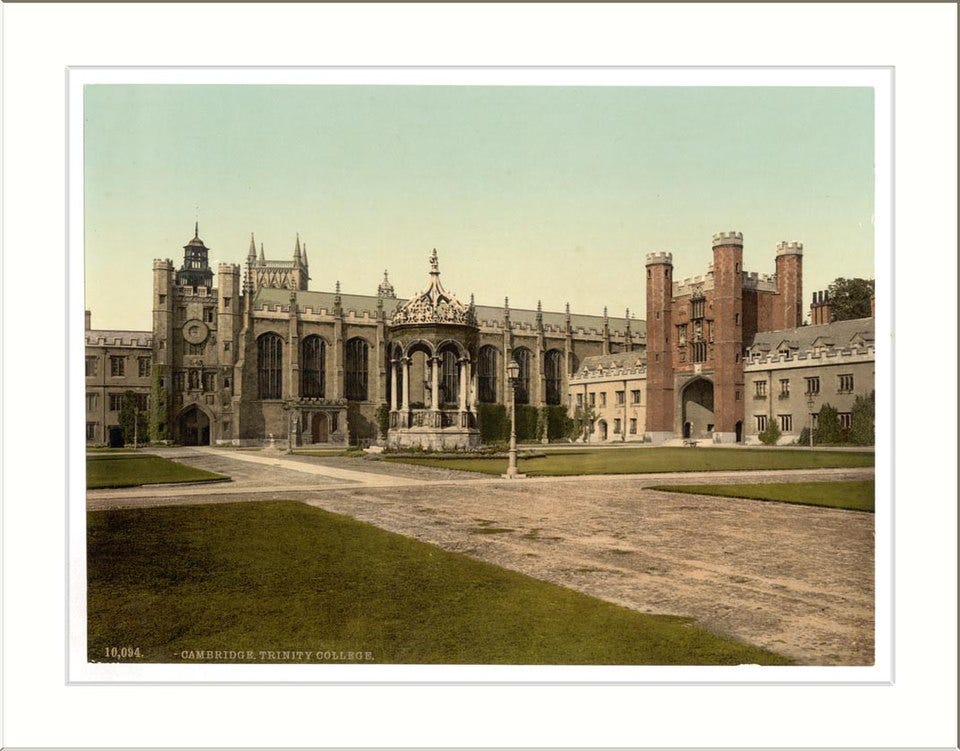
Around the beginning of World War II the British intelligence services were undergoing a period of rapid expansion. Their methods relied on word-of-mouth, and those recruited were characteristically members of the ruling elite, highly intelligent individuals who were, in some cases, multilingual. It has become evident that in their haste to swell their numbers, the Civil Service may not have been particularly rigorous in their vetting procedures. On the same day that Anthony Blunt received a letter offering him a job at MI5, the security service responsible for maintaining order within the country, he received another notifying him that his past connections with the Communist Party precluded him from being considered for a position. Needless to say he ignored the latter missive and reported for duty. As a result of such laxity, he and other recruits managed to penetrate the highest ranks of Britain’s most important secret and political institutions.
At Cambridge, students made social contacts that would sweep them into positions of influence, giving the Soviets, who were targeting elite universities, an entrée into the British ruling class. The aim was to embed long-term moles or sleeper agents within the British establishment. Perhaps it was class snobbery that enabled them to avoid suspicion for so long, but during the course of their activities they managed to procure sensitive secrets which they handed over to their KGB contacts for onward transmission to the Kremlin.
The motives for spying may vary, but as far as the Five were concerned, belief in an ideology, to some extent or another, was probably a motivating factor. During the 1930s they were active in the Cambridge University Socialist Society, the largest society in the university. They all seemed to have developed a strong social conscience, and were sympathetic to the communist cause after witnessing the rise of Fascism in Europe, the Great Depression and the hunger marches. Italian Prime Minister Benito Mussolini, General Franco of Spain and German Führer Adolf Hitler were creating alliances that threatened both the Soviets and the British, and the Five believed that they were being recruited to fight Fascism. They had come to the conclusion that capitalism would not cope with the coming crisis, and that Moscow was the only hope.
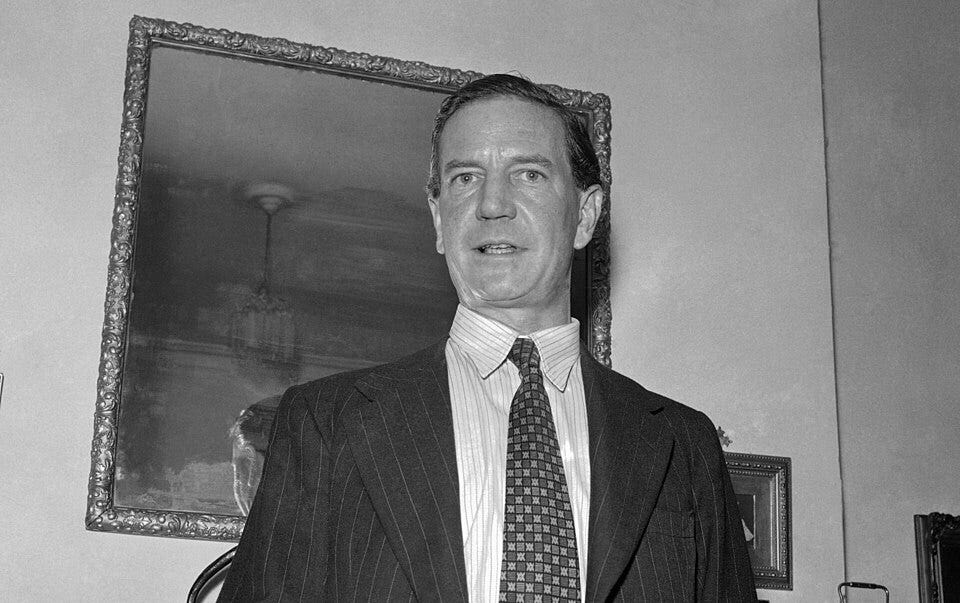
Harold Adrian Russell Philby was born in India while his father was serving in the Indian Civil Service. Nicknamed “Kim” after the Rudyard Kipling character, he read history at Trinity, and it was there that he became acquainted with communist ideas. On a trip to Berlin he witnessed the rise of Nazism and the persecution of Jewish people first hand, and when he graduated in 1934 he went to Vienna, then a hotbed of political intrigue. There he engaged with the leftist underground to help the Jewish community stand up against Fascism, and married a Soviet agent called Litzi Friedmann, who became something of an ideological mentor.
On returning to the UK Philby was recruited as a Soviet agent by Arnold Deutsch, a Czech Jew who was studying psychology at London University as a cover for his clandestine activities. Considered to be the ablest controller that the Soviets ever had, Deutsch had arrived in England in 1933. For a time he had a flat in the Isokon building on Lawn Road, which was the subject of a Dialectic article in February 2025. He was on the lookout for leftist students from British universities: people who would occupy top positions in government diplomacy, administration and the secret services. Philby was an ideal candidate: ambitious, educated, well-connected and committed to communist ideals. After being recruited, he returned to Cambridge with a list of seven names.
The first name on his list was Donald Maclean. Guy Burgess was number seven, and being talkative and difficult to control, not as attractive to the Russians, but he was recruited nonetheless. It is not known who the others were, or what became of them, but the period from autumn 1934 to autumn 1935 was when much of the recruitment at Cambridge took place, and it is thought that there could have been between thirty and forty members of the spy ring.
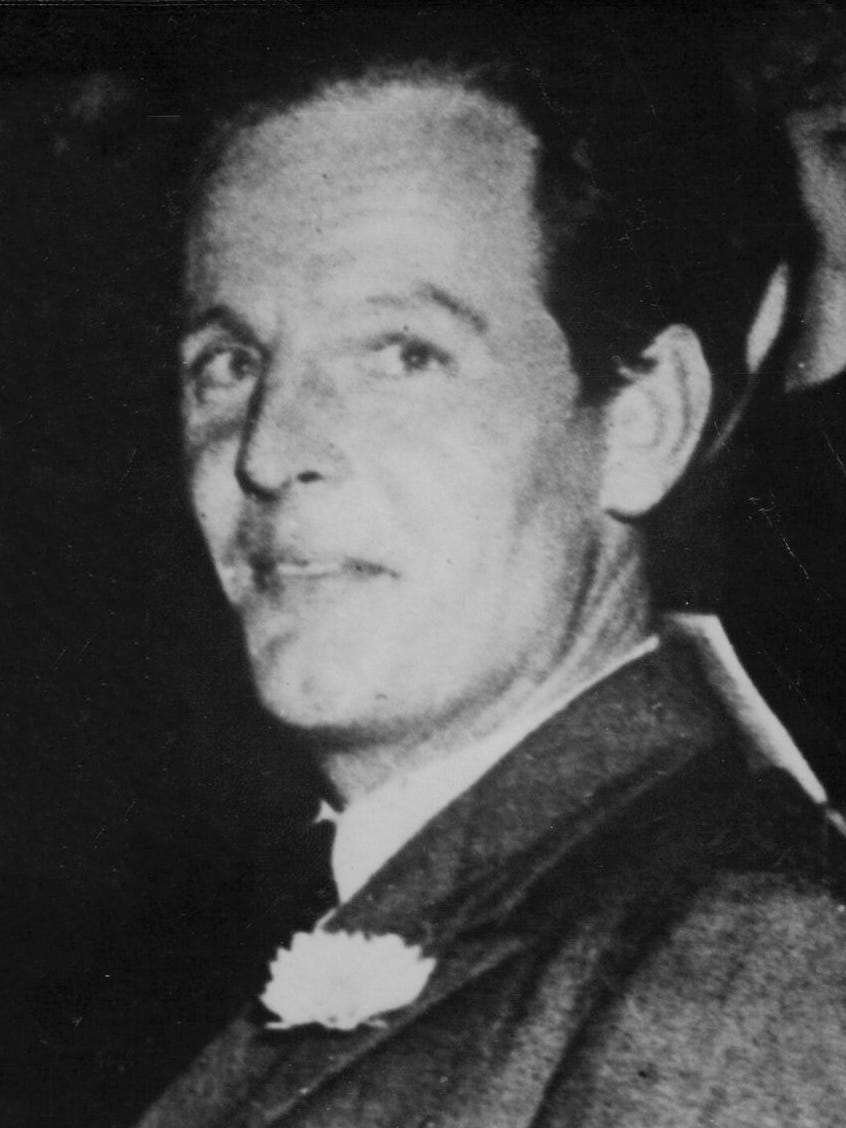
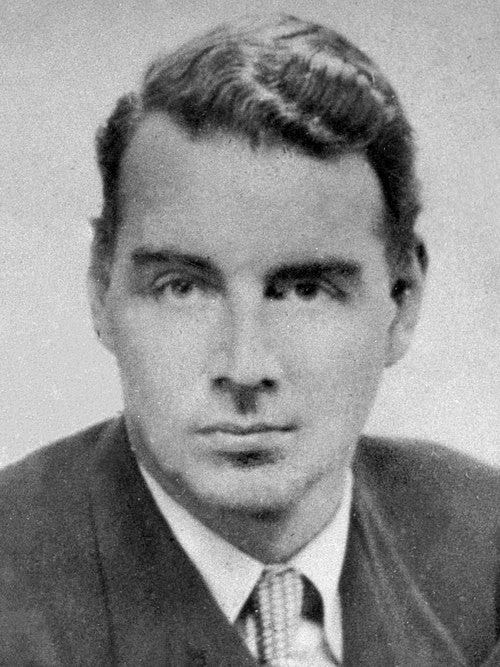
In 1936 Philby travelled to Spain. Posing as a freelance journalist he gathered information on the nationalists led by Franco, and passed it to the Soviets. For a time, Soviet leader Joseph Stalin wanted Franco assassinated, although he later changed his mind. While in Spain, Philby was almost killed in an explosion, and was decorated for gallantry by Franco himself.
After leaving Cambridge, Burgess eventually obtained a post in the BBC’s Talks department. He had been maintaining the cover story of being extremely right-wing. In 1938, through a BBC contact, he obtained a post in MI6, the branch of the British intelligence service that operated abroad. He also managed to get Philby an appointment there. When he was sacked from MI6, allegedly for trying to seduce a fellow instructor at a Special Operations Executive training school, Burgess returned to the BBC to avoid being called up.
Blunt was a mathematician turned art historian. While at Cambridge he was a member of The Apostles, a secret society targeted by the Russians. When war broke out in 1939, he secured a job in MI5 after being recruited by Burgess. They had an affair, and when they took rooms just off Oxford Street in London, it became a veritable nest of spies.
By 1939 Stalin had entered into a pact with Hitler, but with a considerable degree of intellectual arrogance, the Five could not believe that they had been misguided in their allegiances. The Soviet regime was prone to paranoia, which had led to the Stalinist purges to which some of Philby’s handlers from the 1930s had fallen victim. At the time, a British intelligence officer caught committing treason could be executed under British law, and the Russians feared that agents might be spreading disinformation in the interests of British intelligence. Despite everything they did for the USSR, the Cambridge spies were never completely trusted by their communist overlords. Stalin found the idea that the British had no major operations against the Soviet Union suspicious, but the plain truth was that once war broke out, the UK had neither the time nor the resources to spare.
It has been suggested that for some spies, their sexuality was a factor in this unconventional choice of career. Although in certain circles, homosexuality was not socially taboo, it was still illegal, and gay men were already conditioned to a life of secrecy. At university, strong friendships were forged by men who may have felt that because of their sexuality they were on the fringes of society, and in the course of his work as a recruiter, Burgess would use information about the sex lives of individuals for blackmail purposes.
As well as his affair with Blunt, Burgess may also have been sexually involved with Maclean, who was bisexual, and had been recruited by Philby. The son of a politician, Maclean was a former member of the Communist Party. He was perhaps the most ideologically motivated of the Five, and it was one of the biggest oversights of British counterintelligence that they seemed unaware of his communist connections. He secured a position at the Foreign Office, which provided him with access to top secret political plans.
In due course, the Soviets would start receiving information about the British atomic programme, thanks to the activities of the Cambridge Five, and by the beginning of the Cold War, there could be no doubt whatsoever: they were now spying for an enemy.
Next week, part two. If you made it this far, please click the ❤️ - it really helps the publication!
Sources: Stalin’s Englishman: The Lives of Guy Burgess, lecture by Andrew Lownie 24/9/22, Cambridge Development and Alumni Relations; Storyville: Toffs, Queers and Traitors: The Extraordinary Life of Guy Burgess, documentary; cbc.ca News Cambridge Five spy interview unearthed by CBC archives by Sylvia Thomson 23/2/15; Thatcher’s speech Wednesday 21/11/79 Statement to Parliament on the Soviet spy, Professor Anthony Blunt, Eugenus Rex YouTube channel; The Cambridge Five, documentary by Charles Hayes, narrated by Charlton Heston, 2000; Britannica.
Photo Credits: All images Public domain, via Wikimedia Commons:
Trinity College Cambridge circa 1895. Snapshots Of The Past.
Kim Philby in 1955. [1].
Donald Maclean, and Guy Burgess. Press photos of British diplomats published in 1968. United Press International.
The KGB was the foreign intelligence and domestic security agency of the Soviet Union from 1954 to 1991.
Fascinating, Jules. I’m a terrible liar (which I’m fine with!) but find those who are good at it really interesting. I loved reading about these men.
I liked how you set it up around truth, lies, and moral grey areas before getting into the history. What I really liked, though, is how you made this, which could be quite dense just coming off the page. Brilliant read, and I look forward to part 2.